
Use of QR Applications in Pakistani Markets — A Nationwide Survey by the TapX® Team
INTRODUCTION
If someone told you five years ago that Pakistan would become one of the fastest-growing QR-adoption regions in South Asia… you might not have believed it.
Today, the reality is undeniable.
QR codes are everywhere — from small tea stalls and home-grown fashion start-ups to premium malls, hypermarkets, salons, grocery chains, electronics shops, cafés, gyms, educational kiosks, real estate expos, and even product packaging imported from around the world.
Yet, behind this explosion lies a much deeper story:
QR usage in Pakistan is widespread — but not strategic, not standardized, and often unreliable.
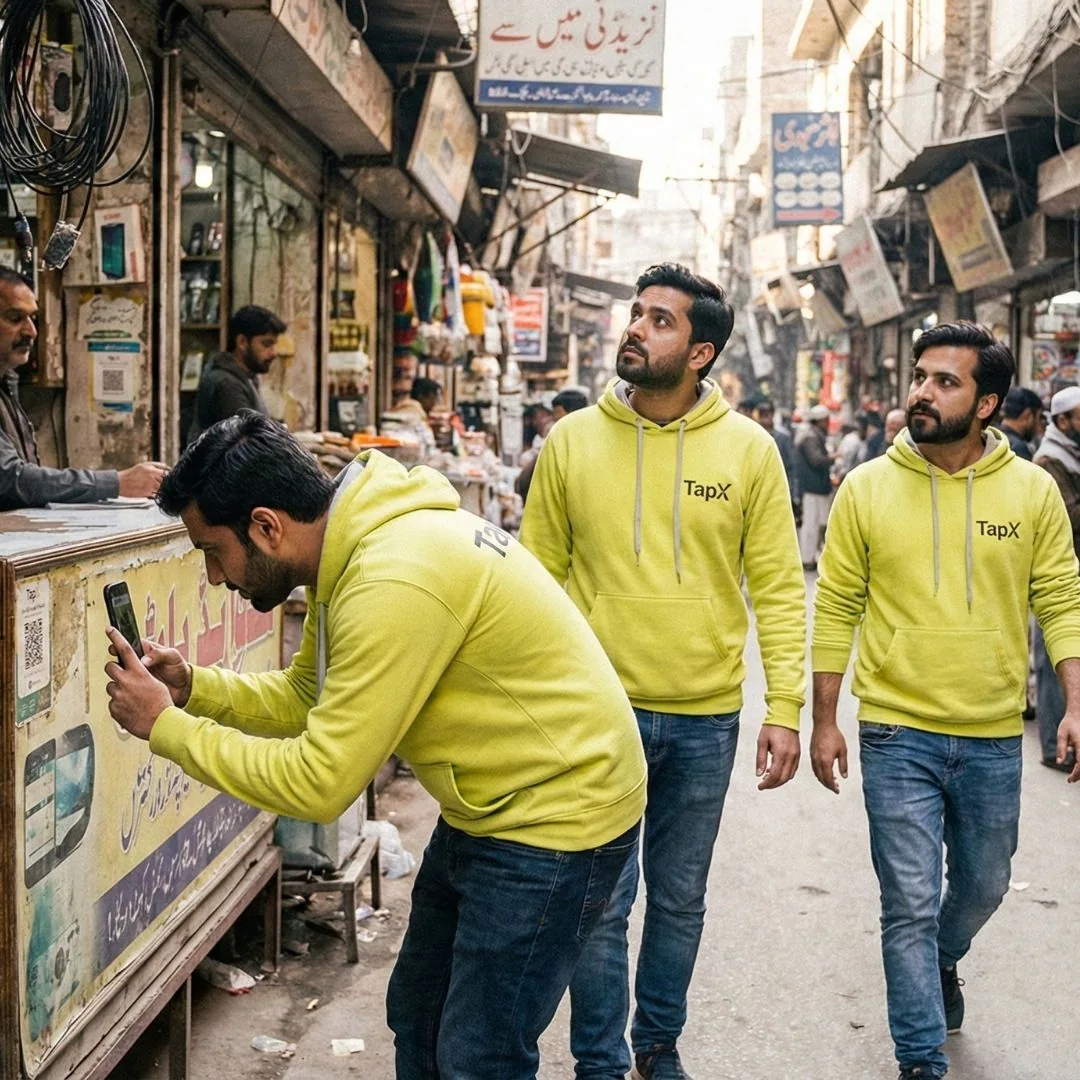
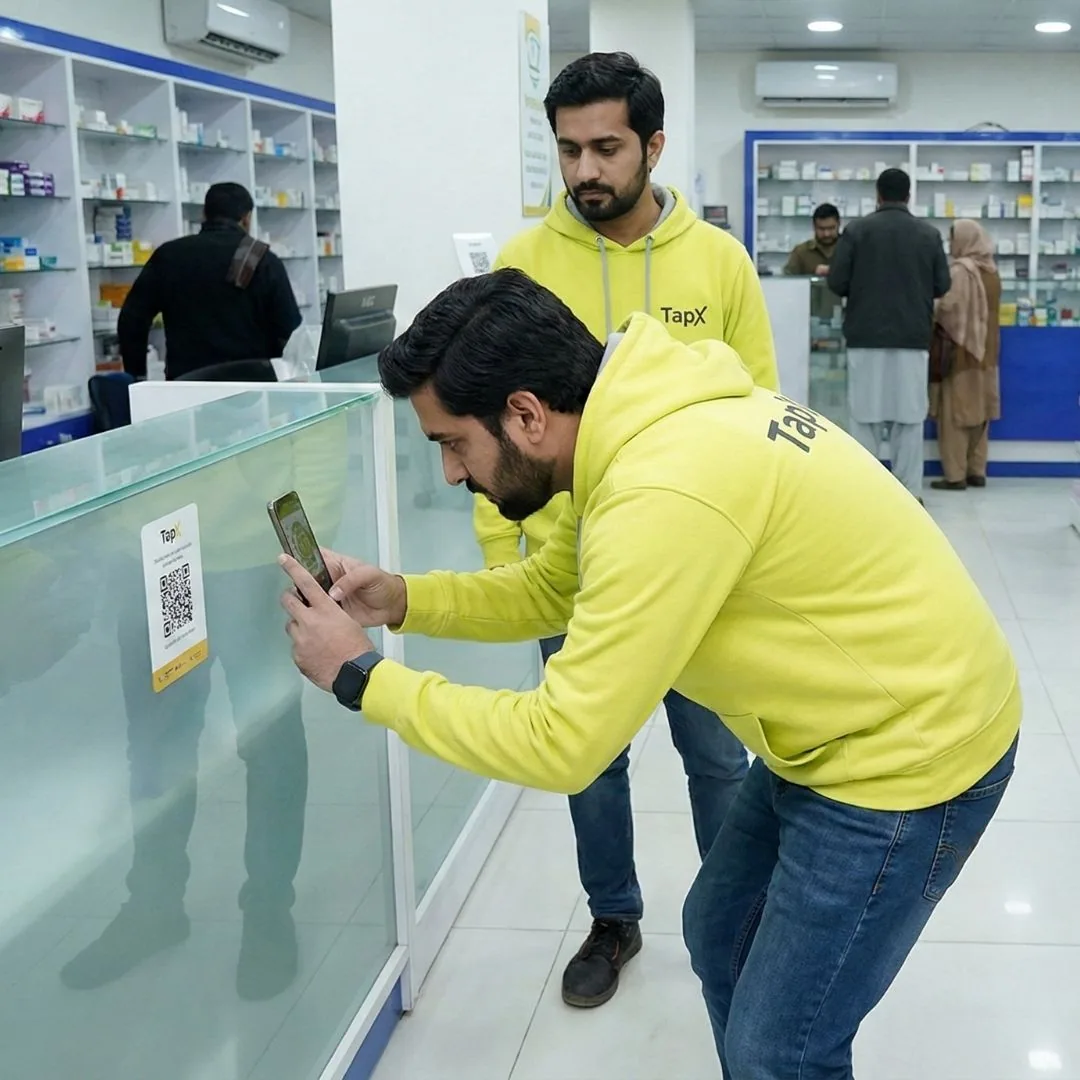
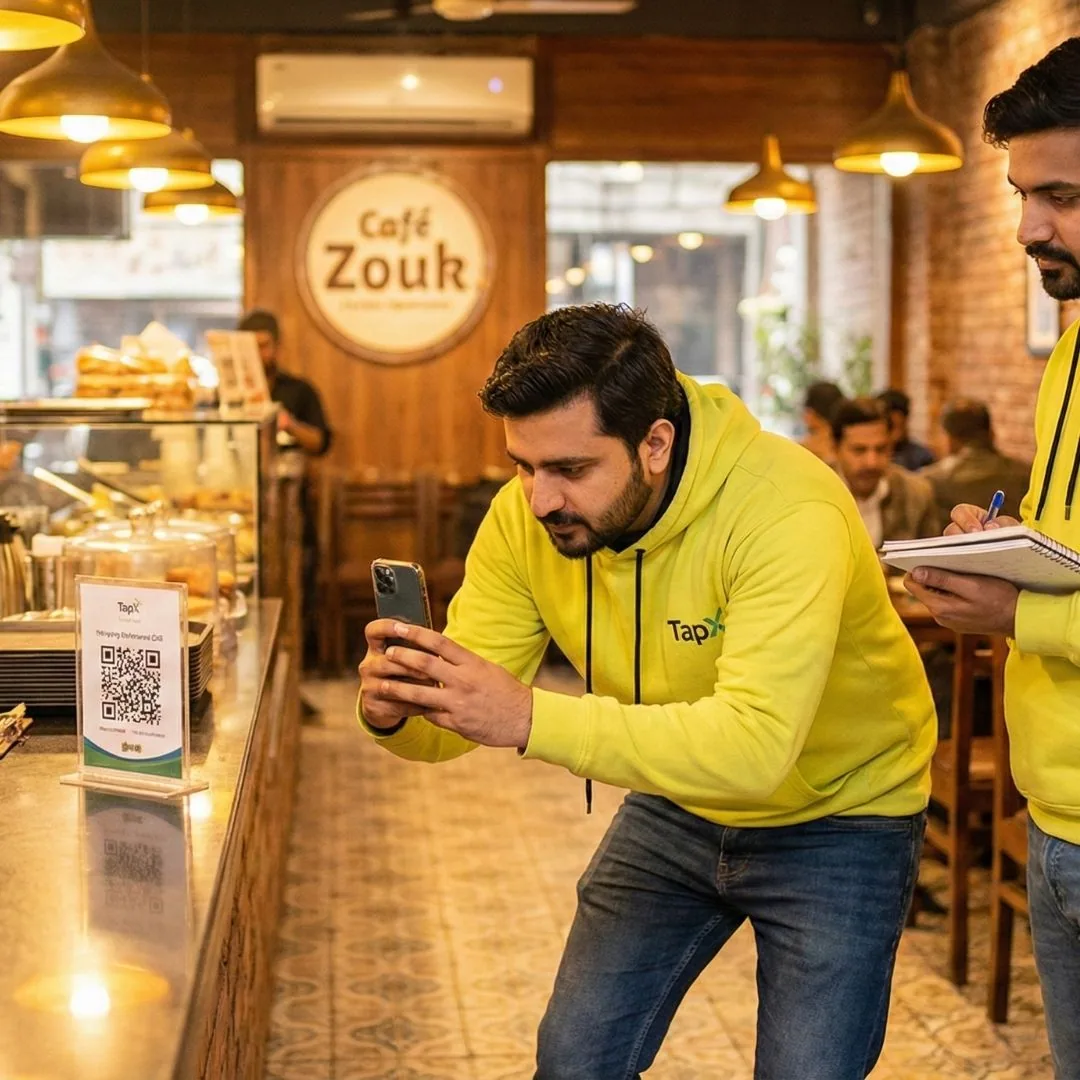
Over a seven-week research period in August - November 2025, the TapX® team conducted a structured, on-ground survey across high-activity retail regions in Pakistan, capturing 1700+ QR instances, scanning each one, and documenting the actual landing experience, success rate, categorization, and end-user journey.
This article presents the first data-driven report on Pakistan's QR ecosystem — its strengths, weaknesses, patterns, and risks.
And most importantly:
What every Pakistani business must understand before deploying QR codes or NFC experiences in 2025–26.
Let's dive in.
1. THE STATE OF QR ADOPTION IN PAKISTAN (2025)
QR Codes Are Not a Trend — They Are Now Infrastructure
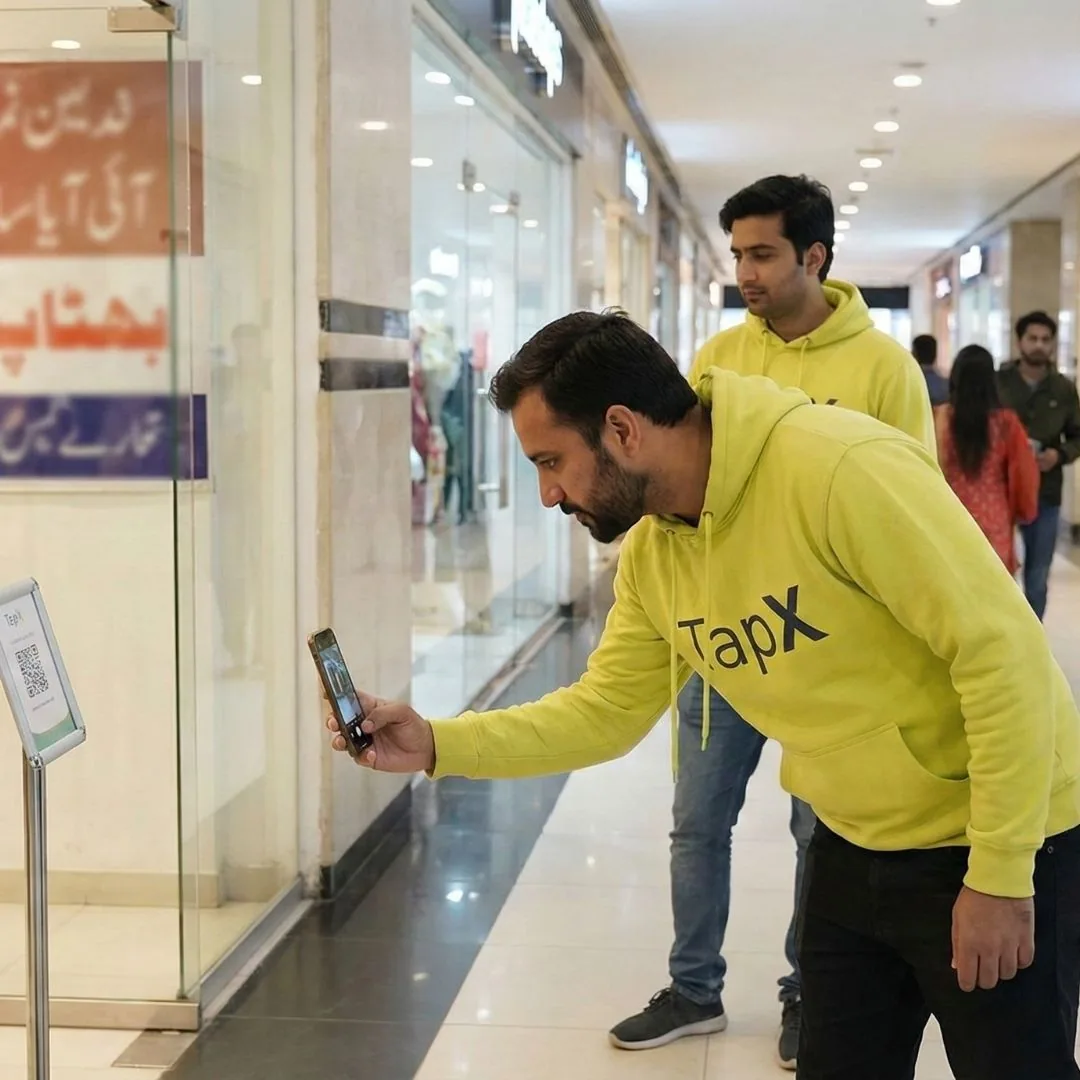
Across the surveyed regions, QR adoption was almost universal:
of retail corridors had visible QR codes
of stores had at least one QR displayed
had multiple QRs performing different tasks
of surveyed locations featured QR usage
This confirms a fundamental shift:
Pakistan has entered the "QR-native retail" stage — but without the systems to manage it properly.
2. WHAT ARE QR CODES BEING USED FOR?
Based on 1700+ real-world QR captures, the functional distribution across the market looked like this:
The first three categories — social media, product info, and feedback — now represent the core use-cases inside Pakistani retail environments.
WhatsApp, in particular, dominated the communication layer, appearing more frequently than Instagram, Facebook, or any other social platform combined.
3. THE "HIDDEN PROBLEM" UNDERNEATH THE GROWTH
Despite the explosion of adoption, the survey uncovered a surprisingly fragile QR ecosystem.
3.1 The Failure Rate Is Alarming
At least 15% of all scanned codes were:
- Expired
- Disabled
- Moved to new URLs
- Linked to campaigns that had ended
- Incorrectly generated
- Or simply broken
In reality, the number is higher, because:
- •30%+ of codes were generated using free third-party QR tools
- •Many of these platforms do not guarantee long-term link integrity
- •Some offer "temporary free plans" that silently expire after a few days or scans
Which brings us to the biggest issue…
4. THE FREE QR CODE PROBLEM: A GROWING RISK FOR PAKISTANI BUSINESSES
During the survey, a large percentage of QR codes were found to be created using non-Pakistani free QR platforms, including:
At first, these appear attractive:
But in real usage… they often turn into digital liabilities.
4.1 The "Ransom Scan" Problem
Several free platforms follow the same model:
- Let users generate a dynamic QR code for free
- Allow a limited number of scans
- Then silently lock the destination
- And present a message like: "This QR code is disabled. Upgrade your plan to continue."
This happened multiple times during the survey, especially on product packaging and promotional posters.
This is disastrous for retailers because:
- •A QR printed on a menu, counter, billboard, tag, or standee cannot simply change.
- •Once printed, it stays in circulation for months or years.
- •If the link breaks, customers lose trust immediately.
4.2 The "Short Link Death" Problem
Some free tools use ephemeral short links.
When their internal systems reset, the link is lost.
Result: QR becomes a dead end.
4.3 The "Foreign Server Risk"
Free QR generators host data on servers outside Pakistan.
If those platforms:
- shut down
- get blocked
- throttle traffic
- or restructure pricing
your entire marketing collateral becomes useless.
This happened to multiple Pakistani businesses during the survey.
4.4 No Local Support
When your QR stops working:
- No WhatsApp support
- No local call center
- No technical SLA
- No recovery of lost destination links
Your only option is to "pay the ransom" or generate a replacement QR — which forces reprinting every asset.
5. WHAT OUR SURVEY PROVES ABOUT BUSINESS IMPACT

5.1 Businesses Use QR Codes Without Strategy
Most businesses simply generate QRs because:
But very few consider:
In our survey:
had no tracking or analytics
had no branding
led to isolated pages with no strategic flow
could be made more effective with better landing experience
5.2 Most QR Journeys Are Fragmented
Pakistan's retail QR journeys are currently: inconsistent, unoptimized, made on dozens of separate platforms, and often confusing for customers.
Examples:
- →A restaurant using one QR for feedback, one for menu, one for social media, and one for payments.
- →A clothing brand using WhatsApp QR, Insta QR, website QR — all placed separately.
- →Tech shops linking to Facebook, WhatsApp, TikTok, Daraz, OLX — with no unified experience.
This fragmentation reduces effectiveness significantly.
5.3 Pakistani Customers Do Scan QRs — A Lot
One thing our team confirmed: Pakistani consumers are scanning QR codes more than ever before.
Across the survey:
- QRs placed on eye-level surfaces were scanned heavily
- F&B feedback QRs especially had strong engagement
- Social channel QR growth was exceptionally high
- WhatsApp channel links received immediate scanning interest
The demand is there.
The infrastructure is not.
6. THE 5 BIGGEST RISKS BUSINESSES ARE NOT AWARE OF
QRs can expire or be disabled without warning
Free QR tools can lock your link after X scans (ransom model)
Unsecured QRs can redirect customers to dangerous sites
Multiple QRs confuse users and weaken engagement
Broken QRs harm reputation more than having no QR at all
In 2025–26, customers expect:
Anything less signals:
"This brand isn't serious about digital."
7. WHY RELIABILITY, STRATEGY & LOCAL SUPPORT NOW MATTER MORE THAN EVER

After completing this survey, one conclusion is unavoidable:
QR codes (and NFC experiences) are no longer "stickers" — they are critical digital entrances to your business.
And like any entrance, they need:
Stability
- No expiry.
- No scan limits.
- No foreign server failures.
- No ransom.
Strategy
- Not 'one QR for every purpose'—but One QR for a unified experience.
Local Support
- If your QR goes down, you need someone you can call instantly.
- Not an international ticketing system.
Transparent Pricing
- Pakistani businesses want clarity — not silent auto-expiry models.
Maximum Impact
One QR should:
- increase engagement
- reduce friction
- simplify the journey
- measure every interaction
- help with brand building
- help with customer communication
8. THE FUTURE OF QR IN PAKISTAN: WHAT BUSINESSES SHOULD EXPECT
Based on this research, we forecast:
The adoption will rise.
The expectations will rise with it.
9. FINAL WORD — WHAT THIS SURVEY MEANS FOR BUSINESSES
This article is not about promoting any particular solution.
It is about presenting the facts from a real on-ground study.
And the facts say:
If a business is planning to use:
then it must ensure:
Because QR codes are no longer optional.
They are now part of the customer journey itself.
And that journey deserves to be simple, stable, and smart.
Ready to Deploy QR Codes the Right Way?
TapX® offers Pakistani businesses the stability, analytics, and local support they need for reliable QR and NFC experiences.
Research Conducted by TapX® Team
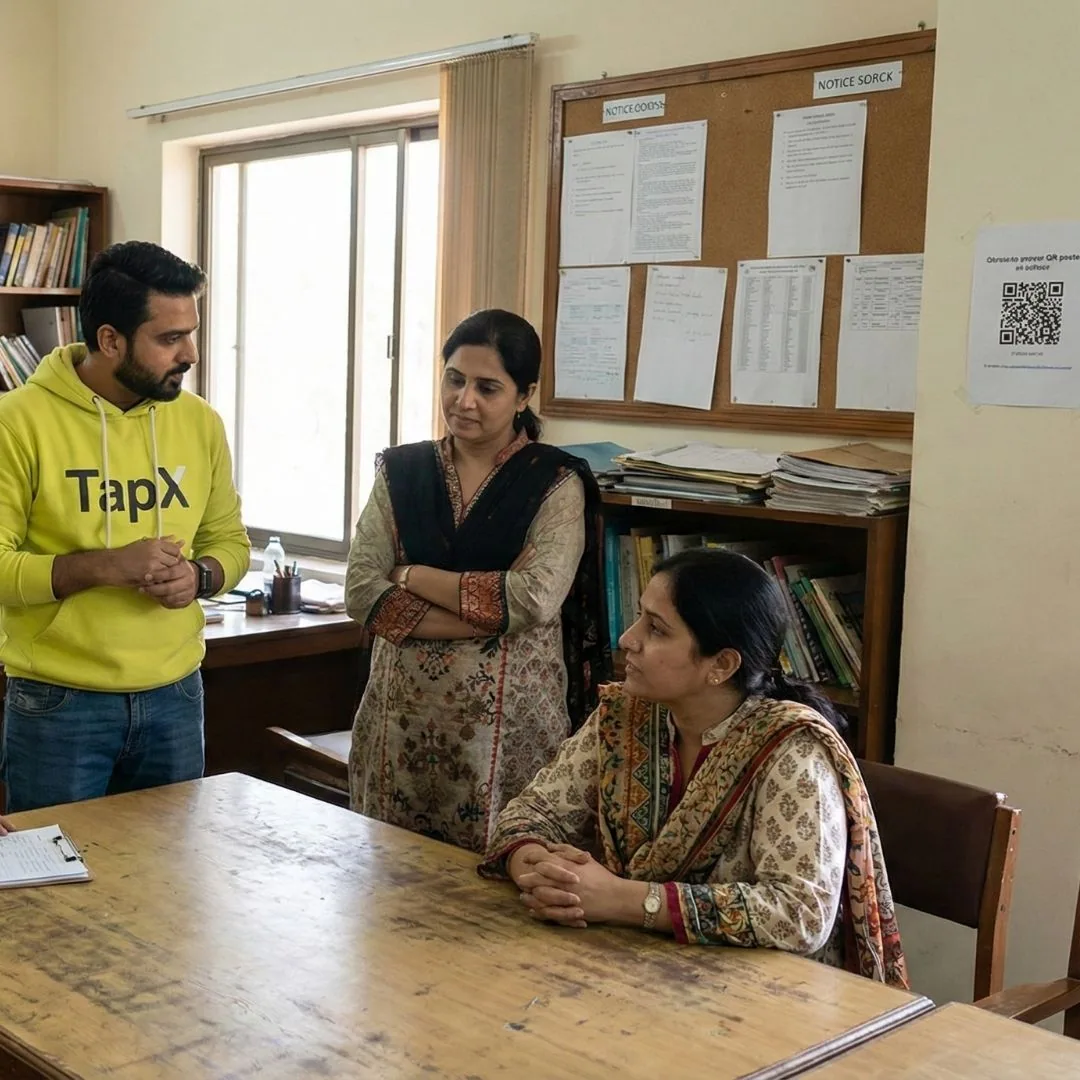
This survey was conducted by the TapX® Research Team across high-activity retail regions in Pakistan over a seven-week period in August - November 2025. The team scanned and documented 1700+ QR instances to provide Pakistani businesses with data-driven insights into the QR ecosystem.
For questions about this research or to request the full dataset, contact us at sales@tapx.pk